Author: Pankaj Saha

  • Download B.Pharm Study Materials

    Download B.Pharm Study Materials

    Download Books, PDF Study Notes and Question Papers according to the new syllabus for B Pharmacy. We at MyPharmaGuide have the best collection of Study Notes, MCQ Tests and Of Books for B.Pharm Students. If you are a Bachelor in Pharmacy Student and Looking for Notes, Books and Question Papers for B.Pharm 1st Semester to B.Pharm 8th Semester then you are on the right page. We have shared all the study materials you need below. Select your year and Study Materials to Download and use them.

    [ez-toc]

    Only Study Notes For Each Semester Available For Now. Other Study Materials will be available very soon. Sorry for the inconvenience caused

    Team MyPharmaGuide

    B.Pharm 1st Semester

    B.Pharm 1st Semester BooksDownload All the PDF Books For B.Pharm 1st Semester
    B.Pharm 1st Semester NotesB.Pharm 1st Semester All Subjects Topic Wise PDF Notes Download
    B.Pharm 1st Semester Question PapersB.Pharm 1st Semester PDF Question Papers of Different Universities
    B.Pharm 1st Semester MCQ TestMCQ Test For B.Pharm 1st Semester Students
    B.Pharm 1st Semester Lab ManualsPractical Lab Manuals for B.Pharm 1st Semester Subjects
    B.Pharm 1st Semester Important QuestionsSubject Wise Important Questions for B.Pharm 1st Semester

    B.Pharm 2nd Semester

    B.Pharm 2nd Semester BooksDownload All the PDF Books For B.Pharm 2nd Semester
    B.Pharm 2nd Semester NotesB.Pharm 2nd Semester All Subjects Topic Wise PDF Notes Download
    B.Pharm 2nd Semester Question PapersB.Pharm 2nd Semester PDF Question Papers of Different Universities
    B.Pharm 2nd Semester MCQ TestMCQ Test For B.Pharm 2nd Semester Students
    B.Pharm 2nd Semester Lab ManualsPractical Lab Manuals for B.Pharm 2nd Semester Subjects
    B.Pharm 2nd Semester Important QuestionsSubject Wise Important Questions for B.Pharm 1st Semester

    B.Pharm 3rd Semester

    B.Pharm 3rd Semester BooksDownload All the PDF Books For B.Pharm 3rd Semester
    B.Pharm 3rd Semester NotesB.Pharm 3rd Semester All Subjects Topic Wise PDF Notes Download
    B.Pharm 3rd Semester Question PapersB.Pharm 3rd Semester PDF Question Papers of Different Universities
    B.Pharm 3rd Semester MCQ TestMCQ Test For B.Pharm 3rd Semester Students
    B.Pharm 3rd Semester Lab ManualsPractical Lab Manuals for B.Pharm 3rd Semester Subjects
    B.Pharm 3rd Semester Important QuestionsSubject Wise Important Questions for B.Pharm 3rd Semester

    B.Pharm 4th Semester

    B.Pharm 4th Semester BooksDownload All the PDF Books For B.Pharm 4th Semester
    B.Pharm 4th Semester NotesB.Pharm 4th Semester All Subjects Topic Wise PDF Notes Download
    B.Pharm 4th Semester Question PapersB.Pharm 4th Semester PDF Question Papers of Different Universities
    B.Pharm 4th Semester MCQ TestMCQ Test For B.Pharm 4th Semester Students
    B.Pharm 4th Semester Lab ManualsPractical Lab Manuals for B.Pharm 4th Semester Subjects
    B.Pharm 4th Semester Important QuestionsSubject Wise Important Questions for B.Pharm 4th Semester

    B.Pharm 5th Semester

    B.Pharm 5th Semester BooksDownload All the PDF Books For B.Pharm 5th Semester
    B.Pharm 5th Semester NotesB.Pharm 5th Semester All Subjects Topic Wise PDF Notes Download
    B.Pharm 5th Semester Question PapersB.Pharm 5th Semester PDF Question Papers of Different Universities
    B.Pharm 5th Semester MCQ TestMCQ Test For B.Pharm 5th Semester Students
    B.Pharm 5th Semester Lab ManualsPractical Lab Manuals for B.Pharm 5th Semester Subjects
    B.Pharm 5th Semester Important QuestionsSubject Wise Important Questions for B.Pharm 5th Semester

    B.Pharm 6th Semester

    B.Pharm 6th Semester BooksDownload All the PDF Books For B.Pharm 6th Semester
    B.Pharm 6th Semester NotesB.Pharm 6th Semester All Subjects Topic Wise PDF Notes Download
    B.Pharm 6th Semester Question PapersB.Pharm 6th Semester PDF Question Papers of Different Universities
    B.Pharm 6th Semester MCQ TestMCQ Test For B.Pharm 6th Semester Students
    B.Pharm 6th Semester Lab ManualsPractical Lab Manuals for B.Pharm 6th Semester Subjects
    B.Pharm 6th Semester Important QuestionsSubject Wise Important Questions for B.Pharm 6th Semester

    B.Pharm 7th Semester

    B.Pharm 7th Semester BooksDownload All the PDF Books For B.Pharm 7th Semester
    B.Pharm 7th Semester NotesB.Pharm 7th Semester All Subjects Topic Wise PDF Notes Download
    B.Pharm 7th Semester Question PapersB.Pharm 7th Semester PDF Question Papers of Different Universities
    B.Pharm 7th Semester MCQ TestMCQ Test For B.Pharm 7th Semester Students
    B.Pharm 7th Semester Lab ManualsPractical Lab Manuals for B.Pharm 7th Semester Subjects
    B.Pharm 7th Semester Important QuestionsSubject Wise Important Questions for B.Pharm 7th Semester
  • Best B.Pharm 4th Semester Notes PDF Download

    Best B.Pharm 4th Semester Notes PDF Download

    Download the Best B.Pharm 4th Semester Notes For B.Pharmacy Students For JNTU, MAKAUT, AKTU, RGUHS, RGPV, Dr M.G.R. Medical University, GPAT and many other University and competitive exams. Our notes are created by experienced lecturers of different renowned universities in India that will help the b.pharmacy students with quick revision at exam time. Our study notes will help students to revise the whole syllabus in minutes. These Notes clearly give you a short overview of the complete units of the B.Pharm subjects.

    Best B.Pharm 4th Semester Notes PDF Download
    Best B.Pharm 4th Semester Notes PDF Download

    Medicinal Chemistry I PDF Notes

    Unit I

    • Introduction to Medicinal Chemistry
    • History and development of medicinal chemistry
    • Physicochemical properties in relation to biological action
    • Drug metabolism

    Unit II

    • Drugs acting on Autonomic Nervous System
    • Adrenergic Neurotransmitters
    • Sympathomimetic agents: SAR of Sympathomimetic agents
    • Adrenergic Antagonists: Alpha-adrenergic blockers, Beta-adrenergic blockers:

    Unit III

    • Cholinergic neurotransmitters
    • Parasympathomimetic agents: SAR of Parasympathomimetic agents
    • Direct acting agents
    • Indirect acting/ Cholinesterase inhibitors (Reversible & Irreversible)
    • Cholinesterase reactivator
    • Cholinergic Blocking Agents: SAR of cholinolytic agent
    • Solanaceous alkaloids and analogues
    • Synthetic cholinergic blocking agent

    Unit IV

    • Drugs acting on Central Nervous System
    • A. Sedatives and Hypnotics: Benzodiazepines, Barbiturates, Miscellaneous
    • B. Antipsychotics: Phenothiazines, Ring Analogues of Phenothiazeines, Fluro butyrophenones, Beta amino ketone, Beta amino ketone
    • C. Anticonvulsants: Barbiturates, Monoacylureas, Benzodiazepines, Miscellaneous

    Unit V

    • Drugs acting on Central Nervous System
    • General anaesthetics: Inhalation anaesthetics, Ultra short-acting barbiturates, Dissociative anaesthetics
    • Narcotic and non-narcotic analgesics: Morphine and related drugs, Narcotic antagonists, Anti-inflammatory agents

    Pharmaceutical Organic Chemistry III PDF Notes

    Unit I

    • Stereo isomerism

    Unit II

    • Geometrical isomerism

    Unit III

    • Heterocyclic compounds

    Unit IV

    • Synthesis, reactions and medicinal uses of the following compounds/derivatives: Pyrazole, Imidazole, Oxazole and Thiazole. Pyridine, Quinoline, Isoquinoline, Acridine and Indole. Basicity of pyridine

    Unit V

    • Reactions of synthetic importance

    Pharmacology I PDF Notes

    Unit I

    • Introduction to Pharmacology
    • Pharmacokinetics

    Unit II

    • Pharmacodynamics
    • Adverse drug reaction
    • Drug interactions
    • Drug discovery and clinical evaluation of new drugs

    Unit III

    • Pharmacology of drugs acting on the peripheral nervous system

    Unit IV

    • a. Neurohumoral transmission in the C.N.S.special emphasis on the importance of various neurotransmitters like with GABA, Glutamate, Glycine, serotonin, and dopamine.
    • b. General anaesthetics and pre-anaesthetics.
    • c. Sedatives, hypnotics and centrally acting muscle relaxants.
    • d. Anti-epileptics
    • e. Alcohols and disulfiram

    Unit V

    • a. Psychopharmacological agents: Antipsychotics, antidepressants, anti-anxiety agents, anti-manics and hallucinogens.
    • b. Drugs used in Parkinson’s disease and Alzheimer’s disease.
    • c. CNS stimulants and nootropics.
    • d. Opioid analgesics and antagonists
    • e. Drug addiction, drug abuse, tolerance and dependence.

    Pharmacognosy and Phytochemistry I PDF Notes

    Unit I

    • Introduction to Pharmacognosy
    • Classification of drugs
    • Quality control of Drugs of Natural Origin

    Unit II

    • Cultivation, Collection, Processing and storage of drugs of natural origin
    • Conservation of medicinal plants

    Unit III

    • Plant tissue culture

    Unit IV

    • Pharmacognosy in various systems of medicine
    • Introduction to secondary metabolites

    Unit V

    • Plant Products
    • Primary metabolites
    • Carbohydrates
    • Proteins and Enzymes
    • Lipids(Waxes, fats, fixed oils)
    • Marine Drugs

    Physical Pharmaceutics II PDF Notes

    Unit I

    • Colloidal dispersions

    Unit II

    • Rheology
    • Deformation of solids

    Unit III

    • Coarse dispersion

    Unit IV

    • Micromeretics

    Unit V

    • Drug stability

    Disclaimer

    The content of mypharmaguide.com is provided for information and educational purposes only. We are not the owner of any PDF Material/Books/Notes/Articles published on this website. No claim is made as to the accuracy or authenticity of the PDF Material/Books/Notes/Articles of the website. In no event will this site or owner be liable for the accuracy of the information contained on this website or its use. mypharmaguide.com provides freely available PDF Material/Books/Notes/Articles on the Internet or other resources like Links etc. This site does not take any responsibility or legal obligations due to the illegal use and abuse of any information published on the website. No responsibility is taken for any information that may appear on any linked websites.

    Conclusion

    We here at MyPharmaGuide share all the Books, Notes, Question Papers and Many more for Pharmacy students. If you like our B.Pharm 4th Semester Notes PDF Download. You can also try our Android Application MyPharmaGuide for reading all the notes online.

  • Best B.Pharm 2nd Semester Notes PDF Download

    Best B.Pharm 2nd Semester Notes PDF Download

    Download the Best B.Pharm 2nd Semester Notes For B.Pharmacy Students For JNTU, MAKAUT, AKTU, RGUHS, RGPV, Dr M.G.R. Medical University, GPAT and many other University and competitive exams. Our notes are created by experienced lecturers of different renowned universities in India that will help the b.pharmacy students with quick revision at exam time. Our study notes will help students to revise the whole syllabus in minutes. These Notes clearly give you a short overview of the complete units of the B.Pharm subjects.

    Human Anatomy and Physiology II PDF Notes

    Nervous System

    • Organization of nervous system, neuron, neuroglia, classification and properties of nerve fibre, electrophysiology, action potential, nerve impulse, receptors, synapse, neurotransmitters.
    • Central nervous system: Meninges, ventricles of brain and cerebrospinal fluid.structure and functions of brain (cerebrum, brain stem, cerebellum), spinal cord (gross structure, functions of afferent and efferent nerve tracts,reflex activity

    Digestive System

    • Anatomy of GI Tract with special reference to anatomy and functions of stomach, ( Acid production in the stomach, regulation of acid production through parasympathetic nervous system, pepsin role in protein digestion) small intestineand large intestine, anatomy and functions of salivary glands, pancreas and liver, movements of GIT, digestion and absorption of nutrients and disorders of

    Respiratory System

    • Anatomy of respiratory system with special reference to anatomy of lungs, mechanism of respiration, regulation of respiration
    • Lung Volumes and capacities transport of respiratory gases, artificial respiration, and resuscitation methods.

    Urinary System

    • Anatomy of urinary tract with special reference to anatomy of kidney and nephrons, functions of kidney and urinary tract, physiology of urine formation, micturition reflex and role of kidneys in acid base balance, role of RAS in kidney and disorders of kidney.

    Endocrine System

    • Classification of hormones, mechanism of hormone action, structure and functions of pituitary gland, thyroid gland, parathyroid gland, adrenal gland, pancreas, pineal gland, thymus and their disorders.

    Reproductive System

    • Anatomy of male and female reproductive system, Functions of male and female reproductive system, sex hormones, physiology of menstruation, fertilization, spermatogenesis, oogenesis, pregnancy and parturition

    Introduction to Genetics

    • Chromosomes, genes and DNA, protein synthesis, genetic pattern of inheritance

    Pharmaceutical Organic Chemistry I PDF Notes

    Unit I

    • Classification, nomenclature and isomerism

    Unit II

    • Alkanes, Alkenes and Conjugated dienes

    Unit III

    • Alkyl halides
    • Alcohols

    Unit IV

    • Carbonyl compounds (Aldehydes and ketones)

    Unit V

    • Carboxylic acid
    • Aliphatic amines

    Biochemistry PDF Notes

    Unit I

    • Biomolecules
    • Bioenergetics

    Unit II

    • Carbohydrate metabolism
    • Biological oxidation

    Unit III

    • Lipid metabolism
    • Amino acid metabolism

    Unit IV

    • Nucleic acid metabolism and genetic information transfer

    Unit V

    • Enzymes

    Pathophysiology PDF Notes

    Unit I

    • Basic principles of Cell injury and Adaptation
    • Basic mechanism involved in the process of inflammation and repair

    Unit II

    • Cardiovascular System
    • Respiratory system
    • Renal system

    Unit III

    • Haematological Diseases
    • Endocrine system
    • Nervous system
    • Gastrointestinal system

    Unit IV

    • Inflammatory bowel diseases, jaundice, hepatitis (A,B,C,D,E,F) alcoholic liver disease
    • Disease of bones and joints
    • Principles of cancer

    Unit V

    • Infectious diseases
    • Sexually transmitted disease

    Computer Application in Pharmacy PDF Notes

    All Units

    • All Topic of Computer Application in Pharmacy Covered

    Environmental Sciences PDF Notes

    All Units

    • All topics of Environmental Sciences Covered

    Disclaimer

    The content of mypharmaguide.com is provided for information and educational purposes only. We are not the owner of any PDF Material/Books/Notes/Articles published on this website. No claim is made as to the accuracy or authenticity of the PDF Material/Books/Notes/Articles of the website. In no event will this site or owner be liable for the accuracy of the information contained on this website or its use. mypharmaguide.com provides freely available PDF Material/Books/Notes/Articles on the Internet or other resources like Links etc. This site does not take any responsibility or legal obligations due to the illegal use and abuse of any information published on the website. No responsibility is taken for any information that may appear on any linked websites.

    Conclusion

    We here at MyPharmaGuide share all the Books, Notes, Question Papers and Many more for Pharmacy students. If you like our B.Pharm 2nd Semester Notes PDF Download. You can also try our Android Application MyPharmaGuide for reading all the notes online.

  • Best B.Pharm 5th Semester Notes PDF Download

    Best B.Pharm 5th Semester Notes PDF Download

    Download the Best B.Pharm 5th Semester Notes For B.Pharm 3rd Semester and 3rd Year Students For JNTU, MAKAUT, AKTU, RGUHS, RGPV, Dr M.G.R. Medical University, GPAT and many other University and competitive exams. Our notes are created by experienced lecturers of different renowned universities in India that will help the b.pharmacy students with quick revision at exam time. Our B.Pharm 5th Semester study notes help B. Pharmacy students to revise the whole syllabus in minutes. B.Pharm Notes clearly give you a short overview of the complete units of the B.Pharm Subjects subjects.

    Join Our Telegram Channel For Instant Support and Realtime Updates

    B.Pharm 5th Semester Notes PDF Download
    B.Pharm 5th Semester Notes PDF Download

    Medicinal Chemistry II B.Pharm 5th Semester Notes Download

    The best Medicinal Chemistry II Notes for B.Pharm Students are topic-wise available in this section. All the notes available here are made according to the syllabus provided by the Pharmacy Council of India.

    Unit I

    • Antihistaminic agents: H1–antagonists, H2-antagonists, Gastric Proton pump inhibitors
    • Anti-neoplastic agents: Alkylating agents, Antimetabolites, Antibiotics, Plant products, Miscellaneous

    Unit II

    • Anti-anginal
    • Vasodilators
    • Calcium channel blockers
    • Diuretics
    • Anti-hypertensive Agents

    Unit III

    • Anti-arrhythmic Drugs
    • Anti-hyperlipidemic agents
    • Coagulant & Anticoagulants
    • Drugs used in Congestive Heart Failure

    Unit IV

    • Drugs acting on Endocrine system
    • Sex hormones
    • Drugs for erectile dysfunction
    • Oral contraceptives
    • Corticosteroids
    • Thyroid and antithyroid drugs

    Unit V

    • Antidiabetic agents
    • Local Anesthetics
    • Benzoic Acid derivatives
    • Amino Benzoic acid derivatives
    • Lidocaine/Anilide derivatives
    • Miscellaneous

    Pharmacology II B.Pharm 5th Semester Notes Download

    Here in this section the best Pharmacology II Notes for B.Pharm Students are topic-wise available. All the notes available here are made according to the syllabus provided by the Pharmacy Council of India.

    Unit I

    • Pharmacology of Drugs Acting on the Cardiovascular System

    Unit II

    • Pharmacology of drugs acting on the cardiovascular system
    • Pharmacology of drugs acting on the urinary system

    Unit III

    • Autocoids and Related Drugs

    Unit IV

    • Pharmacology of Drugs acting on the endocrine system

    Unit V

    • Pharmacology of drugs acting on the endocrine system
    • Bioassay

    Industrial Pharmacy I B.Pharm 5th Semester Notes Download

    Here in this section the best Industrial Pharmacy I Notes for Semester Students are topic-wise available. All the notes available here are made according to the syllabus provided by the Pharmacy Council of India.

    Unit I

    • Preformulation Studies
    • a. Physical properties, b. Chemical Properties

    Unit II

    • Tablets
    • Liquid Orals

    Unit III

    • Capsules: Hard gelatin capsules, Soft gelatin capsules
    • Pellets

    Unit IV

    • Parenteral Products
    • Ophthalmic Preparations

    Unit V

    • Cosmetics
    • Pharmaceutical Aerosols
    • Packaging Materials Science

    Pharmacognosy and Phytochemistry II B.Pharm 5th Semester Notes Download

    Here in this section the best Pharmacognosy and Phytochemistry II Notes for B.Pharm Students are topic-wise available. All the notes available here are made according to the syllabus provided by the Pharmacy Council of India.

    Unit I

    • Metabolic pathways in higher plants and their determination

    Unit II

    • Alkaloids, Phenylpropanoids and Flavonoids, Steroids, Cardiac Glycosides & Triterpenoids, Volatile oils, Tannins, Resins, Glycosides, Iridoids, Other terpenoids & Naphthaquinones

    Unit III

    • Terpenoids, Glycosides, Alkaloids, Resins

    Unit IV

    • Industrial production, estimation and utilization of the following phytoconstituents: Forskolin, Sennoside, Artemisinin, Diosgenin, Digoxin, Atropine, Podophyllotoxin, Caffeine, Taxol, Vincristine and Vinblastine

    Unit V

    • Basics of Phytochemistry

    Pharmaceutical Jurisprudence B.Pharm 5th Semester Notes Download

    Here in this section the best Pharmaceutical Jurisprudence Notes for B.Pharm Students are topic-wise available. All the notes available here are made according to the syllabus provided by the Pharmacy Council of India.

    Unit I

    • Drugs and Cosmetics Act, 1940 and its rules 1945
    • Objectives, Definitions, Legal definitions of schedules to the Act and Rules
    • Import of drugs – Classes of drugs and cosmetics prohibited from import, Import under license or permit. Offences and penalties.
    • Manufacture of drugs – Prohibition of manufacture and sale of certain drugs,
    • Conditions for grant of license and conditions of license for manufacture of drugs, Manufacture of drugs for test, examination and analysis, manufacture of new drug, loan license and repacking license.

    Unit II

    • Drugs and Cosmetics Act, 1940 and its rules 1945.
    • Detailed study of Schedule G, H, M, N, P, T, U, V, X, Y, Part XII B, Sch F & DMR (OA)
    • Sale of Drugs – Wholesale, Retail sale and Restricted license. Offences and penalties
    • Labelling & Packing of drugs- General labelling requirements and specimen labels for drugs and cosmetics, List of permitted colours. Offences and penalties.
    • Administration of the Act and Rules – Drugs Technical Advisory Board, Central Drugs
    • Laboratory, Drugs Consultative Committee, Government drug analysts, Licensing authorities, controlling authorities, Drugs Inspectors

    Unit III

    • Pharmacy Act –1948
    • Medicinal and Toilet Preparation Act –1955
    • Narcotic Drugs and Psychotropic substances Act-1985 and Rules

    Unit IV

    • Study of Salient Features of Drugs and Magic Remedies Act and its rules
    • Prevention of Cruelty to animals Act-1960
    • National Pharmaceutical Pricing Authority

    Unit V

    • Pharmaceutical Legislations
    • Code of Pharmaceutical ethics
    • Medical Termination of Pregnancy Act
    • Right to Information Act
    • Introduction to Intellectual Property Rights (IPR

    Disclaimer

    The content of mypharmaguide.com is provided for information and educational purposes only. We are not the owner of any PDF Material/Books/Notes/Articles published on this website. No claim is made as to the accuracy or authenticity of the PDF Material/Books/Notes/Articles of the website. In no event will this site or owner be liable for the accuracy of the information contained on this website or its use. mypharmaguide.com provides freely available PDF Material/Books/Notes/Articles on the Internet or other resources like Links etc. This site does not take any responsibility or legal obligations due to the illegal use and abuse of any information published on the website. No responsibility is taken for any information that may appear on any linked websites.

    Conclusion

    We here at MyPharmaGuide share all the Books, Notes, Question Papers and Many more for Pharmacy students. If you like our B.Pharm 5th Semester Notes PDF Download. You can also try our Android Application MyPharmaGuide for reading all the notes online.

  • Best B.Pharm 3rd Semester Notes PDF Download

    Best B.Pharm 3rd Semester Notes PDF Download

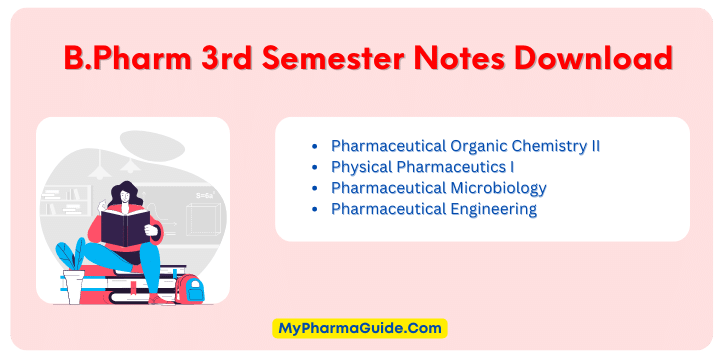
    Download the Best B.Pharm 3rd Semester Notes For B.Pharm 3rd Semester and 2nd Year Students For JNTU, MAKAUT, AKTU, RGUHS, RGPV, Dr M.G.R. Medical University, GPAT and many other University and competitive exams. These notes are made by experienced lecturers of different renowned universities in India that will help the b.pharmacy students for quick revision at exam time. Our study notes help B. Pharmacy students to revise the whole syllabus in minutes. B.Pharm Notes clearly give you a short overview of the complete units of the B.Pharm Subjects subjects.

    Join Our Telegram Channel For Instant Support and Realtime Updates

    B.Pharm 3rd Semester Notes PDF Download
    B.Pharm 3rd Semester Notes PDF Download

    Pharmaceutical Organic Chemistry II B.Pharm 3rd Semester Notes

    Here in this section the best Pharmaceutical Organic Chemistry II Notes for B.Pharm Students are topic-wise available. All the notes available here are made according to the syllabus provided by the Pharmacy Council of India.

    Unit I: Benzene and its derivatives

    • Analytical, synthetic and other evidence in the derivation of the structure of benzene, Orbital picture, resonance in benzene, aromatic characters, Huckel’s rule
    • Reactions of benzene – nitration, sulphonation, halogenation reactivity, Friedelcrafts alkylation- reactivity, limitations, Friedelcrafts acylation
    • Substituents, the effect of substituents on reactivity and orientation of mono substituted benzene compounds towards electrophilic substitution reaction
    • Structure and uses of DDT, Saccharin, BHC and Chloramine

    Unit II

    • Phenols – Acidity of phenols, the effect of substituents on acidity, qualitative tests, Structure and uses of phenol, cresols, resorcinol, naphthols
    • Aromatic Amines – Basicity of amines, the effect of substituents on basicity, and synthetic uses of aryl diazonium salts
    • Aromatic Acids* –Acidity, the effect of substituents on acidity and important reactions of benzoic

    Unit III: Fats and Oil

    • Fatty acids – reactions.
    • Hydrolysis, Hydrogenation, Saponification and Rancidity of oils, Drying oils.
    • Analytical constants – Acid value, Saponification value, Ester value, Iodine value, Acetyl value, Reichert Meissl (RM) value – significance and principle involved in their determination.

    Unit IV: Polynuclear hydrocarbons

    • Synthesis, reactions
    • Structure and medicinal uses of Naphthalene, Phenanthrene, Anthracene, Diphenylmethane, Triphenylmethane and their derivatives

    Unit V: Cycloalkanes

    • Stabilities – Baeyer’s strain theory, limitation of Baeyer’s strain theory, Coulson and Moffitt’s modification, Sachse Mohr’s theory (Theory of strainless rings), reactions of cyclopropane and cyclobutane only

    Physical Pharmaceutics I B.Pharm 3rd Semester Notes

    Here in this section the best Physical Pharmaceutics I Notes for B.Pharm Students are topic-wise available. All the notes available here are made according to the syllabus provided by the Pharmacy Council of India.

    Unit I: Solubility of Drugs

    • Solubility expressions, mechanisms of solute-solvent interactions, ideal solubility parameters, solvation & association, quantitative approach to the factors influencing solubility of drugs, diffusion principles in biological systems. Solubility of gas in liquids, the solubility of liquids in liquids, (Binary solutions, ideal solutions) Raoult’s law, real solutions. Partially miscible liquids, Critical solution temperature and applications. Distribution law, its limitations and applications

    Unit II

    • States of Matter and properties of matter
    • Physicochemical properties of drug molecules

    Unit III: Surface and interfacial phenomenon

    • Liquid interface, surface & interfacial tensions, surface free energy, measurement of surface & interfacial tensions, spreading coefficient, adsorption at liquid interfaces, surface active agents, HLB Scale, solubilisation, detergency, adsorption at solid interface.

    Unit IV: Complexation and Protein binding

    • Introduction, Classification of Complexation, Applications, methods of analysis, protein binding, Complexation and drug action, crystalline structures of complexes and thermodynamic treatment of stability constants.

    Unit V: pH, buffers and Isotonic solutions

    • Sorensen’s pH scale, pH determination (electrometric and calorimetric), applications of buffers, buffer equation, buffer capacity, buffers in pharmaceutical and biological systems, and buffered isotonic solution.

    Pharmaceutical Microbiology B.Pharm 3rd Semester Notes

    Here in this section the best Pharmaceutical Microbiology Notes for B.Pharm Students are topic-wise available. All the notes available here are made according to the syllabus provided by the Pharmacy Council of India.

    Unit I

    • Introduction, history of microbiology, its branches, scope and its importance.
    • Introduction to Prokaryotes and Eukaryotes
    • Study of ultra-structure and morphological classification of bacteria, nutritional requirements, raw materials used for culture media and physical parameters for growth, growth curve, isolation and preservation methods for pure cultures, cultivation of anaerobes, quantitative measurement of bacterial growth (total & viable count).
    • Study of different types of phase contrast microscopy, dark field microscopy and electron microscopy

    Unit II

    • Identification of bacteria using staining techniques (simple, Gram’s &Acid fast staining) and biochemical tests (IMViC).
    • Study of principle, procedure, merits, demerits and applications of physical, chemical gaseous, radiation and mechanical methods of sterilization
    • Evaluation of the efficiency of sterilization methods.
    • Equipment employed in large-scale sterilization. Sterility indicators.

    Unit III

    • Study of morphology, classification, reproduction/replication and cultivation of Fungi and Viruses.
    • Classification and mode of action of disinfectants
    • Factors influencing disinfection, antiseptics and their evaluation. For bacteriostatic and bactericidal actions
    • Evaluation of bactericidal & Bacterios
    • Sterility testing of products (solids, liquids, ophthalmic and other sterile products) according to IP, BP

    Unit IV

    • Designing of aseptic area, laminar flow equipment; study of different sources of contamination in an aseptic area and methods of prevention, clean area classification.
    • Principles and methods of the different microbiological assay. Methods for standardization of antibiotics, vitamins and amino acids.
    • Assessment of a new antibiotic

    Unit V

    • Types of spoilage, factors affecting the microbial spoilage of pharmaceutical products, sources and types of microbial contaminants, assessment of microbial contamination and spoilage.
    • Preservation of pharmaceutical products using antimicrobial agents, and evaluation of microbial stability of formulations.
    • Growth of animal cells in culture, the general procedure for cell culture, Primary, established and transformed cell culture
    • Application of cell cultures in the pharmaceutical industry and research

    Pharmaceutical Engineering B.Pharm 3rd Semester Notes PDF Download

    Here in this section the best Pharmaceutical Engineering Notes for B.Pharm Students are topic-wise available. All the notes available here are made according to the syllabus provided by the Pharmacy Council of India.

    Unit I

    • Flow of fluids
    • Size Reduction
    • Size Separation

    Unit II

    • Heat Transfer
    • Evaporation
    • Distillation

    Unit III

    • Drying
    • Mixing

    Unit IV

    • Filtration
    • Centrifugation

    Unit V

    • Materials of pharmaceutical plant construction, Corrosion and its prevention

    Disclaimer

    The content of mypharmaguide.com is provided for information and educational purposes only. We are not the owner of any PDF Material/Books/Notes/Articles published on this website. No claim is made as to the accuracy or authenticity of the PDF Material/Books/Notes/Articles of the website. In no event will this site or owner be liable for the accuracy of the information contained on this website or its use. mypharmaguide.com provides freely available PDF Material/Books/Notes/Articles on the Internet or other resources like Links etc. This site does not take any responsibility or legal obligations due to the illegal use and abuse of any information published on the website. No responsibility is taken for any information that may appear on any linked websites.

    Conclusion

    We here at MyPharmaGuide share all the Books, Notes, Question Papers and Many more for Pharmacy students. If you like our B.Pharm 3rd Semester Notes PDF Download. You can also try our Android Application MyPharmaGuide for reading all the notes online.

  • Best B.Pharm 1st Semester Notes PDF Download

    Best B.Pharm 1st Semester Notes PDF Download

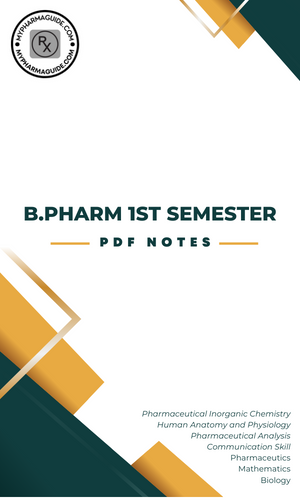
    Download the Best Notes For B.Pharm 1st Semester and 1st Year Students for JNTU, MAKAUT, AKTU, RGUHS, RGPV, Dr M.G.R. Medical University, GPAT and many other University and competitive exams. These notes are made by experienced lecturers of different renowned universities in India that will help the b.pharmacy students for quick revision at exam time. Our study notes help B. Pharmacy students to revise the whole syllabus in minutes. These study materials clearly give you a short overview of the complete units of the B.Pharm Subjects.

    B.Pharm 1st Semester Notes PDF Download
    B.Pharm 1st Semester Notes PDF Download

    [ez-toc]

    Human Anatomy and Physiology I B.Pharm 1st Semester Notes

    Here in this section the best Human Anatomy and Physiology I Notes for B.Pharm Students are topic-wise available. All the notes available here are made according to the syllabus provided by the Pharmacy Council of India.

    Introduction to Human Body

    • Definition and Scope of Anatomy and Physiology
    • Structural Organization and Body Systems
    • Basic Life Processes
    • Homeostasis
    • Anatomical Terminology

    Cellular Level of Organization

    • Structure and Function of Cell
    • Transport Across Cell Membrane
    • Cell Division
    • Cell Junction
    • Cell Communication
    • Intracellular signalling pathway activation by the extracellular signal molecule
    • Forms of Intracellular Signaling

    Tissue Level of Organization

    • Classification of Tissues
    • Structure of Tissues
    • Location and Functions of Epithelial, Muscular and Nervous and Connective Tissue

    Integumentary System

    • Structure and Functions of Skin

    Skeletal System

    • Divisions of Skeletal System
    • Types of Bone
    • functions
    • Functions of bones of axial and appendicular skeletal system
    • Organization of skeletal muscle
    • Physiology of muscle contraction
    • Neuromuscular Junction

    Joints

    • Structural and functional classification of Joints
    • Types of joints movements and its articulation

    Body Fluids and Blood

    • Body fluid
    • Composition and Functions of Blood
    • Hemopoeisis
    • Formation of Hemoglobin
    • Anemia
    • Mechanisms of Coagulation
    • Blood Grouping
    • Rh Factors
    • Disorders of Blood

    Lymphatic System

    • Lymphatic organs and tissues
    • Lymphatic vessels
    • Lymph Circulation
    • Functions of Lymphatic System

    Peripheral Nervous System

    • Classification of Peripheral Nervous System
    • Structure and functions of Sympathetic Nervous System
    • Structure and functions of Parasympathetic Nervous System

    Special Senses

    • Structure and functions of eye, ear, nose and tongue and their disorders

    Cardiovascular System

    • Heart
    • Regulation of Blood Pressure
    • Electrocardiogram and Disorders of Heart

    Pharmaceutical Analysis I B.Pharm 1st Semester Notes

    Here in this section the best Pharmaceutical Analysis I Notes for B.Pharm Students are topic-wise available. All the notes available here are made according to the syllabus provided by the Pharmacy Council of India.

    Pharmaceutical Analysis

    • Definition and scope
    • Different techniques of analysis
    • Methods of expressing concentration
    • Primary and secondary standards

    Errors

    • Sources of errors
    • Types of errors
    • Methods of minimizing errors
    • Accuracy
    • Precision and significant figures

    Acid-Base Titration

    • Theories of acid-base indicators
    • Classification of acid-base titrations and theory involved in titrations of strong, weak, and very weak acids and bases
    • Neutralization curve

    Non-aqueous Titration

    • Solvents
    • Acidimetry and Alkalimetry Titration
    • Estimation of Sodium benzoate and Ephedrine HCl

    Precipitation Titrations

    • Mohr’s method, Volhard’s,
    • Modified Volhard’s, Fajans method
    • Estimation of Sodium chloride

    Complexometric Titration

    • Classification
    • Masking and Demasking Reagents
    • Metal ion Indicators
    • Estimation of Magnesium sulphate, and calcium gluconate.

    Gravimetry

    • Principles and steps involved in gravimetric analysis
    • Purity of the precipitate: co-precipitation and post-precipitation
    • Estimation of barium sulphate.

    Redox Titrations

    • Concepts of oxidation and reduction
    • Types of redox titrations (Principles and applications)
    • Cerimetry, Iodimetry, Iodometry, Bromatometry, Dichrometry, Titration with potassium iodate

    Conductometry

    • Introduction
    • Conductivity cell
    • Conductometric titrations
    • Applications

    Potentiometry

    • Electrochemical cell, construction and working of reference (Standard hydrogen, silver chloride electrode and calomel electrode) and indicator electrodes (metal electrodes and glass electrode), methods to determine the end point of potentiometric titration and applications.

    Polarography

    • Principle
    • Ilkovic equation
    • construction and
    • Working of dropping mercury electrodes and rotating platinum electrode
    • Applications

    Pharmaceutics I B.Pharm 1st Semester Notes

    Here in this section the best Pharmaceutics I Notes for B.Pharm Students are topic-wise available. All the notes available here are made according to the syllabus provided by the Pharmacy Council of India.

    History of Pharmacy

    • History of the profession of Pharmacy in India in relation to pharmacy education

    Dosage Forms

    • Introduction to Dosage form
    • Classification and Definitions of Dosage Forms

    Prescription

    • Definition
    • Parts of Prescription
    • Handling of Prescriptions and Errors in prescription

    Posology

    • Definition
    • Factors affecting Posology
    • Pediatric dose calculations based on age, body weight and body surface area.

    Pharmaceutical Calculation

    • Weights and measures – Imperial & Metric system
    • Calculations involving percentage solutions
    • alligation, proof spirit and isotonic solutions based on freezing point and molecular weight.

    Powders

    • Definition, Classification, Advantages and Disadvantages of Powders
    • Simple & Compound powders – official preparations, dusting powders, effervescent, efflorescent and hygroscopic powders
    • Eutectic mixtures. Geometric dilutions

    Liquid Dosage Form

    • Advantages and disadvantages of liquid dosage form
    • Excipients used in the formulation of liquid dosage form
    • Solubility enhancement techniques

    Monophasic Liquids

    • Definitions and preparations of Gargles, Mouthwashes, Throat Paint, Eardrops, Nasal drops, Enemas, Syrups, Elixirs, Liniments and Lotions

    Suspensions

    • Definition, Advantages, Disadvantages and classification of Suspension
    • Preparation of suspensions
    • Flocculated and Deflocculated suspension & stability problems and methods to overcome

    Emulsions

    • Definition and Classification of Emulsion
    • Emulsifying agent
    • Test for the identification of the type of Emulsion
    • Methods of preparation & stability problems and methods to overcome.

    Suppositories

    • Definition, types, advantages and disadvantages of Suppositories
    • Types of bases
    • Methods of preparations
    • Displacement value & its calculations
    • Evaluation of suppositories

    Pharmaceutical incompatibilities

    • Definition and classification of Pharmaceutical incompatibilities
    • physical, chemical and therapeutic incompatibilities with examples.

    Semisolid dosage form

    • Definitions, classification of Semisolid Dosage Form
    • Mechanisms and factors influencing dermal penetration
    • Preparation of ointments, pastes, creams and gels
    • Excipients used in semi-solid dosage form
    • Evaluation of semi-solid dosages forms

    Pharmaceutical Inorganic Chemistry B.Pharm 1st Semester Notes

    Here in this section the best Pharmaceutical Inorganic Chemistry Notes for B.Pharm Students are topic-wise available. All the notes available here are made according to the syllabus provided by the Pharmacy Council of India.

    Impurities

    • History of Pharmacopoeia
    • Sources and types of impurities
    • Principle involved in the limit test for Chloride, Sulphate, Iron, Arsenic, Lead and Heavy metals
    • Modified limit test for Chloride and Sulphat

    Acids, Bases and Buffer

    • Buffer equations and buffer capacity in general
    • buffers in pharmaceutical systems
    • preparation, stability, buffered isotonic solutions, measurements of tonicity
    • calculations and methods of adjusting isotonicity

    Major extra and intracellular electrolytes

    • Functions of major physiological ions
    • Electrolytes used in the replacement therapy: Sodium chloride, Potassium chloride, Calcium gluconate and Oral Rehydration Salt (ORS)
    • Physiological acid base balance

    Dental Products

    • Dentifrices
    • role of fluoride in the treatment of dental caries
    • Desensitizing agents
    • Calcium carbonate, Sodium fluoride, and Zinc eugenol cement

    Gastrointestinal Agents

    • Acidifiers
    • Antacid
    • Cathartics
    • Antimicrobials

    Miscellaneous compounds

    • Expectorants
    • Haematinics
    • Poison and Antidotes
    • Astringents

    Radiopharmaceuticals

    • All Topics Covered

    Communication Skill B.Pharm 1st Semester Notes

    Here in this section the best Communication Skill Notes for B.Pharm Students are topic-wise available. All the notes available here are made according to the syllabus provided by the Pharmacy Council of India.

    Communication Skill

    • All Chapters Covered

    Remedial Biology B.Pharm 1st Semester Notes

    Here in this section the best Remedial Biology Notes for B.Pharm Students are topic-wise available. All the notes available here are made according to the syllabus provided by the Pharmacy Council of India.

    Remedial Biology

    • All Chapters Covered

    Remedial Mathematics B.Pharm 1st Semester Notes

    Here in this section the best Remedial Mathematics Notes for B.Pharm Students are topic-wise available. All the notes available here are made according to the syllabus provided by the Pharmacy Council of India.

    Remedial Mathematics

    • All Chapter Covered

    Disclaimer

    The content of mypharmaguide.com is provided for information and educational purposes only. We are not the owner of any PDF Material/Books/Notes/Articles published on this website. No claim is made as to the accuracy or authenticity of the PDF Material/Books/Notes/Articles of the website. In no event will this site or owner be liable for the accuracy of the information contained on this website or its use. mypharmaguide.com provides freely available PDF Material/Books/Notes/Articles on the Internet or other resources like Links etc. This site does not take any responsibility and legal obligations due to the illegal use and abuse of any information published on the website. No responsibility is taken for any information that may appear on any linked websites.

    Conclusion

    We here at MyPharmaGuide share all the Books, Notes, Question Papers and Many more for Pharmacy students. If you like our B.Pharm 1st Semester Notes PDF Download. You can also try our Android Application MyPharmaGuide for reading all the notes online.

  • Download D.Pharm Study Materials

    Download D.Pharm Study Materials

    Download Books, PDF Study Notes and Question Papers according to the new syllabus for Diploma in Pharmacy. We at MyPharmaGuide have the best collection of Study Notes, MCQ Tests and Of Books for D.Pharm Students. If you are a Diploma in Pharmacy Student and Looking for Notes, Books and Question Papers for Diploma in Pharmacy 1st Year and a Diploma in Pharmacy 2nd Year then you are on the right page. We have shared all the study materials you need below. Select your year and Study Materials to Download and use them.

    [ez-toc]

    D.Pharm 1st Year

    D.Pharm 1st Year BooksDownload All the PDF Books For D.Pharm 1st Year
    D.Pharm 1st Year NotesD.Pharm 1st Year All Subjects Topic Wise PDF Notes Download
    D.Pharm 1st Year Question PapersD.Pharm 1st Year PDF Question Papers of Different Universities
    D.Pharm 1st Year MCQ TestMCQ Test For D.Pharm 1st Year Students
    D.Pharm 1st Year Lab ManualsPractical Lab Manuals for D.Pharm 1st Year Subjects
    D.Pharm 1st Year Important QuestionsSubject Wise Important Questions for D.Pharm 1st Year

    D.Pharm 2nd Year

    D.Pharm 2nd Year BooksDownload All the PDF Books For D.Pharm 2nd Year
    D.Pharm 2nd Year NotesD.Pharm 2nd Year All Subjects Topic Wise PDF Notes Download
    D.Pharm 2nd Year Question PapersD.Pharm 2nd Year PDF Question Papers of Different Universities
    D.Pharm 2nd Year MCQ TestMCQ Test For D.Pharm 2nd Year Students
    D.Pharm 2nd Year Lab ManualsPractical Lab Manuals for D.Pharm 2nd Year Subjects
    D.Pharm 2nd Year Important QuestionsSubject Wise Important Questions for D.Pharm 2nd Year

    Frequently Asked Questions

    What is PharmD and DPharm?

    PharmD is a six-year doctorate-level degree programme in the field of Pharmacy whereas DPharm is a two-year diploma course in the field of Pharmacy. After successfully completing any of the courses you are eligible to become a Registered Pharmacist in India.

    What is DPharm and BPharm

    As we already mentioned above D.Pharm is a two-year diploma-level course in the field of Pharmacy and B.Pharm is a four-year graduate-level course in the field of Pharmacy. After successfully completing any of the courses you are eligible to become a Registered Pharmacist in India. B.Pharm graduates get more opportunities than Diploma passed students.

    DPharma can be done after the 10th?

    No, you can not take admission to the Diploma in Pharmacy (D.Pharm) course after completing the 10th. The criteria to get admission in D.Pharm complete 12th with Physics, Chemistry and Mathematics and score at least 45% in the exam.

    D Pharmacy is of How Many Years?

    D Pharmacy or Diploma in Pharmacy or D.Pharm is a two-year diploma-level course. After completing the course you have complete an Internship of 3months.

    D.Pharm Syllabus for 1st Year

    The new syllabus of D.Pharm includes the following subjects In D.Pharm 1st Year
    Pharmaceutics, Pharmaceutical Chemistry, Pharmacognosy, Human Anatomy and Physiology and Social Pharmacy. Check the detailed syllabus of D.Pharm 1st Year.
  • D.Pharm 2nd Year Books New Syllabus PDF Download

    D.Pharm 2nd Year Books New Syllabus PDF Download

    As the D.Pharm Syllabus changed recently many students are searching for the New Syllabus D.Pharm 2nd Year Books. So here in this post, we are sharing some of the best value books that are written according to the new Syllabus of the Pharmacy Council of India. So now you don’t have to visit any other websites or fake telegram channels to Download these books nor do have to pay anyone to download the books. We have shared many PDF copies of Books that are available open source and for most of the books that are not available, we have shared best-buying links for them. So you can easily get them from there. We hope that you will like the post if it provides value to you do comment below and share this post with your friends too.

    Books are the best friend of a student. Books help you to get knowledge about things so it’s very necessary to read good books for good knowledge. In this post, we are sharing some good books for your upcoming exams. These books will help you too much to gain knowledge as well as pass the University, Yearly or any other competitive exams.

    Join Our Telegram Channel For Instant Support and Realtime Updates

    Download D.Pharm 2nd Year Books PDF

    Pharmacology

    • Size: 33 MB

    Biochemistry and Clinical Pathology

    • Size: 42MB

    Hospital and Clinical Pharmacy

    • Size: 60MB

    Pharmacy Law and Ethics

    • Size: 60MB

    Community Pharmacy and Management

    • Size:

    Pharmacotherapeutics

    • Size: 14MB

    Download Study Notes For D.Pharm 2nd Year

    D.Pharm 2nd Year Books New Syllabus PDF Download
    D.Pharm 2nd Year Books New Syllabus PDF Download

    D.Pharm 2nd Year Books Nirali Prakashan

    Pharmacology

    • Price: 375
    • Pages: 312
    • Authors: Dr. Adhikrao V. Yadav, Ashwini S. Dubal
    • Edition: 1st January 2022
    • Nirali Prakashan

    Biochemistry and Clinical Pathology

    • Price: 320
    • Pages: 265
    • Authors: Dr. Kuntal Das
    • Edition: 1st January 2022
    • Nirali Prakashan

    Hospital and Clinical Pharmacy

    • Price: 230
    • Authors: A R Paradkar, S A Chunawala
    • Edition: 1st January 2022
    • Nirali Prakashan

    Pharmacotherapeutics

    • Price: 175
    • Pages: 144
    • Authors: Dr. Arun K. Mishra, Dr. Harpreet Singh 
    • Edition: 1st January 2022
    • Nirali Prakashan

    Community Pharmacy and Management

    • Price: 240
    • Pages: 200
    • Authors: Dr. Adhikrao V. Yadav, Ashwini S. Dubal
    • Edition: 1st January 2022
    • Nirali Prakashan

    D.Pharm 2nd Year Books Thakur Publication

    Pharmacology

    • Price: 350
    • Pages: 448
    • Authors: Satya Parkash Singh (Author), Harikesh Maurya (Author), Dharmender Jaglan (Author)
    • Edition: 1st January 2022
    • Thakur Publication

    Biochemistry and Clinical Pathology

    • Price: 260
    • Pages: 286
    • Authors: Prof. (Dr.) R. Srinivasan (Author), Prof. (Dr.) Ajay Pal Singh (Author), Prof. Devika K. Tilekar (Author)
    • Edition: 1st January 2022
    • Thakur Publication

    Pharmacotherapeutics 

    • Price: 180
    • Pages: 288
    • Authors: Prof. (Dr.) Vishal Garg (Author), Dr. Bishwanath Mishra (Author), Mr. Vikram Ramchandra Shinde (Author)
    • Edition: 1st January 2022
    • Thakur Publication

    Hospital and Clinical Pharmacy

    • Price: 230
    • Pages: 248
    • Authors: Hemendra Gautam (Author), Shashank Tiwari (Author), Madankumar D. Kadwe (Author)
    • Edition: 1st January 2022
    • Thakur Publication

    Hindi D.Pharm 2nd Year Books

    Pharmacology Hindi Book

    • Price: 221
    • Pages: 260
    • Authors: Dr. Mithlesh Dwivedee (Author), Anoop Kumar Singh (Author), Prof. Jyoti Saxena (Author), Adity Gupta (Author)
    • Edition: 1st January 2022
    • Gyan Publication

    Biochemistry Hindi Book

    • Price: 280
    • Pages: 308
    • Authors: Dr. R.K Agarwal (Author)
    • Edition: 1st January 2022
    • Sarthak Publications

    Hospital and Clinical Pharmacy Hindi Book

    • Price: 240
    • Pages: 258
    • Author: Chaudhury
    • Edition: August 2022
    • Sarthak Publications

    Pharmacy Law and Ethics Hindi Book

    • Price: 200
    • Pages: 232
    • Author: Verma Bhatt
    • Edition: January 2022
    • Sarthak Publications

    Pharmacotherapeutics Hindi Book

    • Price: 260
    • Pages: 272
    • Author: Pankaj Kumar
    • Edition: August 2022
    • Sarthak Publications

    Community Pharmacy and Management

    • Price: 200
    • Pages: 202
    • Author: Shivam
    • Edition: August 2022
    • Sarthak Publications

    Affiliate Disclosure

    This post contains affiliate links. If you use these links to buy something we may earn a commission and this commission helps us to maintain this Website at no additional cost to you. Thanks.”

    Disclaimer

    The content of mypharmaguide.com is provided for information and educational purposes only. We are not the owner of any PDF Material/Books/Notes/Articles published on this website. No claim is made as to the accuracy or authenticity of the PDF Material/Books/Notes/Articles of the website. In no event will this site or owner be liable for the accuracy of the information contained on this website or its use. mypharmaguide.com provides freely available PDF Material/Books/Notes/Articles on the Internet or other resources like Links etc. This site does not take any responsibility or legal obligations due to the illegal use and abuse of any information published on the website. No responsibility is taken for any information that may appear on any linked websites.

    Conclusion

    It is very hard to collect and share D.Pharm 2nd Year Books nowadays as the syllabus is changed recently many publishers did not update their books. So we have faced many problems making the post for the D.Pharm 2nd Year Students. We have shared Download links of the PDF books as well purchase links for many books also. If you wish and we also recommend purchasing the books using our links so you can take benefit of some extra discounts. So if you like the post D.Pharm 2nd Year Books New Syllabus PDF Download then comment below and share the post with your friends on different social media. Thank you 🙂

  • D.Pharm 1st Year Books New Syllabus PDF Download

    D.Pharm 1st Year Books New Syllabus PDF Download

    As the D.Pharm Syllabus changed recently many students are searching for the New Syllabus D.Pharm 1st Year Books. So here in this post, we are sharing some of the best valuable books that are written according to the new Syllabus of the Pharmacy Council of India. So now you don’t have to visit any other websites or fake telegram channels to Download these books nor do have to pay anyone to download the books. We have shared many PDF copies of Books that are available open source and for most of the books that are not available, we have shared best-buying links for them. So you can easily get them from there. We hope that you will like the post if it provides value to you do comment below and share this post with your friends too.

    D.Pharm 1st Year Books New Syllabus  PDF Download
    D.Pharm 1st Year Books New Syllabus PDF Download

    Download D.Pharm 1st Year Books PDF

    Dispensing Pharmacy

    • Password: pharmacypdfbooks
    • Size: 129MB

    Pharmacognosy

    • Size: 7MB

    Human Anatomy and Physiology

    • Size: 34MB

    Pharmaceutical Chemistry

    • Part 1
    • Size: 22MB

    Pharmaceutical Chemistry

    • Part 2
    • Size: 16.5 MB

    Social Pharmacy

    • Size: 3MB

    You May Also Interested In

    Download Study Notes for D.Pharm 1st Year

    D.Pharm 1st Year Thakur Publication Books

    Pharmacognosy 

    • Price: 240
    • Pages: 256
    • Edition: 1st January 2022
    • Thakur Publications Pvt. Ltd

    Pharmaceutics

    • Price: 270
    • Pages: 288
    • Edition: 1st January 2022
    • Thakur Publications Pvt. Ltd

    Pharmaceutical Chemistry

    • Thakur Publications Pvt. Ltd

    Social Pharmacy

    • Price: 255
    • Pages: 301
    • Edition: 1st January 2022
    • Thakur Publications Pvt. Ltd

    Human Anatomy Physiology

    • Price: 260
    • Pages: 312
    • Edition: 1st January 2022
    • Thakur Publications Pvt. Ltd

    D.Pharm 1st Year Nirali Prakashan Books

    Human Anatomy Physiology

    • Price: 450
    • Edition: 1st January 2019
    • Nirali Prakashan

    Social Pharmacy

    • Price: 200
    • Pages: 244
    • Edition: 1st January 2021
    • Nirali Prakashan

    Pharmacognosy 

    • Price: 290
    • Pages: 250
    • Edition: 1st January 2021
    • Nirali Prakashan

    Pharmaceutics

    • Price: 316
    • Pages: 268
    • Edition: 1st January 2021
    • Nirali Prakashan

    Pharmaceutical Chemistry

    • Price: 330
    • Pages: 326
    • Edition: 1st January 2021
    • Nirali Prakashan

    D.Pharm 1st Year Books Hindi Version

    Pharmaceutics Hindi Book

    • Price: 272
    • Pages: 328
    • Edition: 1st January 2022
    • Gyan Publications

    Pharmacognosy Hindi Book

    • Price: 230
    • Pages: 266
    • Edition: 1st January 2022
    • Gyan Publications

    Social Pharmacy Hindi Book

    • Price: 281
    • Pages: 356
    • Edition: 1st January 2022
    • Gyan Publications

    Human Anatomy and Physiology Hindi Book

    • Price: 196
    • Pages: 240
    • Edition: 1st January 2022
    • Gyan Publications

    Pharmaceutical Chemistry Hindi Book

    • Price: 255
    • Pages: 296
    • Edition: 1st January 2022
    • Gyan Publications

    Affiliate Disclosure

    This post contains affiliate links. If you use these links to buy something we may earn a commission and this commission helps us to maintain this Website at no additional cost to you. Thanks.”

    Disclaimer

    The content of mypharmaguide.com is provided for information and educational purposes only. We are not the owner of any PDF Material/Books/Notes/Articles published on this website. No claim is made as to the accuracy or authenticity of the PDF Material/Books/Notes/Articles of the website. In no event will this site or owner be liable for the accuracy of the information contained on this website or its use. mypharmaguide.com provides freely available PDF Material/Books/Notes/Articles on the Internet or other resources like Links etc. This site does not take any responsibility and legal obligations due to the illegal use and abuse of any information published on the website. No responsibility is taken for any information that may appear on any linked websites.

    Conclusion

    It is very hard to collect and share D.Pharm 1st Year Books nowadays as the syllabus is changed recently many publishers did not update their books. So we have faced many problems making the post for the D.Pharm 1st Year Students. We have shared Download links of the PDF books as well purchase links of many books also. If you wish and we also recommend to purchase the books using our links so you can take benefits of some extra discounts. So if you like the post D.Pharm 1st Year Books New Syllabus PDF Download then comment below and share the post with your friends in different social medias. Thank you 🙂

  • DPharm 1st Year Important Questions

    Welcome to another post of MyPharmaGuide where we will share some DPharm 1st Year Important Questions for the upcoming examinations. We hope that they will help you guys to score some better marks in your exams. We have shared D.Pharm 1st Year Important Question Subject wise so you can easily read them and study them.

    Pharmaceutics DPharm 1st Year Important Questions

    Here we have shared Pharmaceutics short and descriptive questions.

    Pharmaceutics Important Short Questions

    • Give examples of nutritive and non-nutritive sweeteners.
    • Give one example of prodrugs.
    • What are toxoids?
    • BCG vaccine is used to treat _______________ diseases.
    • _______________ is used for storage of photosensitive pharmaceutical product.
    • _________________ are used to separate the suspension of a solid in a gas(air).
    • The working principle of ball mill is_____________ & __________________.
    • What is menstruum?
    • In case of filtration the rate of filtration is ________________ to the particle size.
    • Why simple syrup I.P. is considered a self-preservative?
    • What is the HLB system of emulsifying agents? Discuss the selection of emulsifying agents.
    • Differentiate between Active and Passive immunity along with examples.
    • Why white soft paraffin is not used in eye ointment bases?
    • First Indian Pharmaceutical Codexwas published in ___________.
    • Differentiate between hard and soft gelatin capsules.
    • Why Glycerine is added to throat paints?
    • Define with example (any two): Suspension, Emulsions, Suppositories
    • Write the test for the identification of an emulsion.
    • Why oily vehicles are not used in the preparation of nasal drops? Give reason.
    • Define displacement value.
    • State difference between syrup and elixir.
    • Mention different mechanisms used for size reduction.
    Pharmaceutics Important Descriptive Questions
    Pharmaceutics Important Descriptive Questions

    Pharmaceutics Important Descriptive Questions

    • Classify plastic materials with examples. What is a cullet?
    • What are the advantages of a Novel drug delivery system over a traditional drug delivery system?
    • Justify the importance of preservatives in the pharmaceutical industry. Classify preservatives according to their mechanism of action.
    • Explain construction and working of Cutter Mill or Hammer Mill
    • Write down the working principle and use of the hammer mill.
    • Define drying and its application in the pharmaceutical industry.
    • Differentiate between flocculated and deflocculated suspension.
    • Define syrup. Write a note on various methods of preparation of syrup.
    • What is a primary emulsion? Explain the preparation of emulsion.
    • Discuss the salient features of the third edition of pharmacopoeia.
    • Write a short note on the mixing powders.
    • Define extraction with classification. Write down any two factors which are related to filtration.
    • Write a short note on the Double cone blender.
    • Define ointment. Classify ointment bases. Describe the various methods of preparation of ointment.
    • Define suppositories with advantages and disadvantages. What are the ideal properties of suppositories bases?
    • Write the manufacturing defects in tablet manufacturing.
    • Write the stability problems associated with emulsion. How can you overcome it?
    • Differentiate between – 1. Pastes and Ointments. 2. Lotions and Liniments.
    • Define and classify different types of tablets.
    • Give principle, working and use of fluidized bed drier
    DPharm 1st Year Important Questions
    DPharm 1st Year Important Questions

    Pharmaceutical Chemistry D.Pharm 1st Year Important Question Papers

    We have shared 3types of Important Questions for Pharmaceutical Chemistry.

    Pharmaceutical Chemistry Long Answer Questions

    • Write the chemical structure, chemical name, uses and brand names of the following drugs
      • Phenytoin
      • Fluconazole
      • Propranolol
      • Fluoxetine
      • Furosemide
      • Metformin
      • Paracetamol

    Pharmaceutical Chemistry Short Answers Questions

    • Write the uses, stability and storage conditions, and types of formulations of the following drugs
      • Dopamine
      • Acetylcholine
      • Clidinium bromide
      • Atropine sulphate
      • Aspirin
      • Diazepam
      • Ferrous sulphate
      • Aluminium hydroxide gel
      • Amitriptyline
      • Calcium carbonate
      • Ibuprofen

    Pharmaceutical Chemistry Objective Answers Questions

    • Use of Dicyclomine hydrochloride is ____________
    • Use of Atenolol is ____________
    • Example of Hexadentate ligand is ___________
    • _________ is a cyclic hydrocarbon which is used as general anaesthetics.
    • Chlorpromazine elixir can be used as________
    • Alcohol withdrawal symptoms can be treated by________
    • Anxiety disorder can be treated with _________
    • ________ is a natural anti-arrhythmic agent.
    • Isosorbide di-nitrate is act as a________
    • _________is act as low ceiling diuretics.
    • ________  is a natural hypoglycaemic agent.
    • Example of natural analgesic is ________
    • 2-acetoxy benzoic acid is used to treat_________
    • Acetaminophen is also known as ________ 
    • Primaquine is used to treat_________
    • which penicillin is narrow spectrum penicillin?
    • Streptomycin is a example of ________
    • Vinca alkaloids are used to treat_________
    • ceric sulphate is used as oxidizing agent in ________ titration
    • write an example of a self-indicator. 

    Social Pharmacy DPharm 1st Year Important Questions

    Social Pharmacy Important Objective Questions

    • CDSCO stands for ____________. (Central Drug Standard and ControlOrganization)
    • The sterilization operati0on in the case of males is called ____. (Vasectomy)
    • BCG vaccine is introduced into our body through the _____ route. (Intradermal)
    • Vitamin B1 is also known as ____. (Thiamine)
    • Which part of Curcuma longa plants are used as nutraceuticals? (Rhizomes)
    • The presence of Koplik’s spots confirms the diagnosis of _____ the disease. (Measles)
    • Whooping Cough is caused by ________ bacteria. (Bordetella Pertussis)
    • In which year National Leprosy Control Programme was introduced? (1954)
    • Hepatitis B was formerly known as ______. (Serum hepatitis)
    • Diethylcarbamazine is the drug of choice for treating ____ (Filariasis)
    • Treponema Pallidum is responsible for __ disease. (Syphilis)
    • Normal blood glucose level ranges from _ to _ mg per 100 ml. (70-90)
    • __ means completely eliminating a disease from the human population. a) Eradication b)Prevention c)Intervention d)Control (Ans: a)
    • Which of the following factor affects health? a)Environment b)Socio-economic c)Personal d)All (Ans: d)
    • Symptoms of upper respiratory infection typically last from __ days. a)3 to 14 b)20 to 22 c)1 to 10 d)16 to 19 (Ans: a)
    • In India, ____ % of cases of malaria occur due to Plasmodium vivax. a)20 b)70 c)10 d)40
    • The SARS coronavirus genome is approximate ____ kb. a)29.7 b)10.7 c)12.7 d)18.7
    • India reported HIV or AIDS cases at the beginning of ______.
    • Xerophthalmia is __________
    • Which is a Trace element?

    Social Pharmacy Important Short Questions

    • Write a note on Role of Pharmacist in Public Health.
    • Describe about Millennium Development Goals.
    • What are the signs and symptoms of Drug addiction?
    • Classify Food.
    • Write a note on Nutraceuticals.
    • Write down the Health Impact of Junk Foods.
    • Define the term Epidemiology, Epidemic, Endemic and Pandemic.
    • Write a note on SARS.
    • Write about Leprosy.
    • Write a Note on NPCBVI.
    • Write a Note on NPCCHH.

    Social Pharmacy Important Long Questions

    • Describe about Indicators of Health
    • What are the different contraceptive measures? Describe any one of them
    • Describe the Importance of breast Feeding
    • Write about Air Pollution
    • Describe various Vitamins
    • Discuss about STDs
    • Write causative agent, clinical presentation, treatment and role of Pharmacist in case of tuberculosis

    Pharmacognsoy D.Pharm 1st Year Important Questions

    Pharmacognosy Important Long Answer Questions

    • Write in short about the pharmacological classification of crude drugs. What are the advantages and disadvantages of this method of classification?
    • Define alkaloids and write about their properties. Classify alkaloids with examples.
    • Write the synonym, biological source, chemical constituents of an antihypertensive and an antimalarial crude drug?
    • Write short notes on Digitalis and Senna
    • Write the biological source, chemical constituents, uses and preparation of Cotton.
    • Write in details about the preparation of Asava and Churna. (Give diagram wherever applicable)
    • What is a nutraceutical? Give example of one such crude drug which can be used as nutraceutical. Define prebiotic and probiotic.
    • Write a short note on the uses of following drugs: (a) Antitumour (b) Diuretics (c) Antirheumatics  (d) Antiseptics & Disinfectant (e) Drugs acting on CNS
    • Write biological source, chemical constituent and uses of the following drugs: (a) Liquorice (b) Senna  (c) Castor oil (d) Opium.
    • Write the identification tests of the following: (a) Alkaloids (b) Glycosides (c) Tannins (d) Volatile Oil

    Pharmacognsoy Important Short Answe Questions

    • Define Sophistication, Admixture and Spoilage.
    • Write a short note on Ayurveda.
    • How can you identify steroids and triterpenoids by the help of phytochemical investigation?
    • Give an example of antidiabetic crude drug with its synonym, biological source, chemical constituents and adulterants.
    • Write the uses of Papain, Diastase and Kaolin.
    • Classify glycosides on the basis of the linkage between glycone and aglycone.
    • Write a short note on anti-tussive crude drugs or astringents.
    • Write biological source, chemical constituents, commercial preparation, therapeutic and cosmetic uses of Sandalwood oil.
    • Write a short note on moisture content or ash value.
    • Write the chemical constituents of Gokhru, Fennel and Opium.
    • What are antitussives? Explain any two drugs under this category.
    • Write the uses of following drugs:- (a) Belladonna (b) Garlic (c) Beeswax  (d) Chaulmoogra oil (e) Ispagula
    • Give a detail about biological source, chemical constituent and uses of the following drugs: (a) Rauwolfia (b) Ginger (c) Cinchona (d) Nux- vomica.

    Human Anatomy and Physiology D.Pharm 1st Year Important Questions

    Human Anatomy and Physiology Important Short Questions

    • Define cell. Enlist its components.
    • Give the names of four Cranial Nerves.
    • Name the hormones secreted by Adrenal glands.
    • Name fundamental tissues of the body.
    • Name the arteries supplying blood to liver, intestine diaphragm and kidneys.
    • Draw a neat labeled diagram of L.S of Kidney.
    • Name different organs of respiratory system
    • Explain how skin helps in maintaining body temperature.
    • Define: Anatomy and Physiology.
    • List the types of cells present in the blood.
    • What is cardiac output ? Write its normal value.
    • Give the functions of hypothalamus.
    • Define Anatomy & Physiology.
    • Name different organs of respiratory system.
    • Give the components of lymphatic system.
    • Mention disease caused by hyposecretion and hypersecretion of growth hormones.
    • Mention any two functions of spleen.
    • Name the three auditory ossicles.
    • ‘Mitochondria is called power house of cell’ State reason.
    • Draw and label reflex arc.
    • Define lymph. Mention different components of lymphatic system
    • Define: Medial, Lateral, Menninges, GFR (Glomerular Filtration Rate), Anaemia, Reproduction, Cell

    Human Anatomy and Physiology Important Long Questions

    • Write the effects of sympathetic and parasympathetic nerve stimulation on (i) Heart (ii) Blood vessels and (iii) Pupil.
    • Mention the digested end products and enlist the enzymes involved in (i) carbohydrate (ii) protein digestion
    • Define hormone. Enlist the hormones secreted by anterior and posterior pituitary gland.
    • Explain the process of urine formation.
    • Name any six cranial nerves with function.
    • Write anatomy and physiology of thyroid gland.
    • Explain conducting system in heart.
    • Write the mechanism of blood coagulation.
    • Define Respiration. Explain the mechanism of respiration.
    • Classify Muscular Tissue. Explain anatomy and physiology of different types of muscular tissue
    • Differentiate between CNS & ANS.
    • Define blood pressure. Explain factors maintaining blood pressure.
    • Define Digestion. Explain chemical digestion of food.
    • Define Skeleton. Write the difference between male and female pelvis.
    • Give the role of diaphragm in the mechanism of respiration.
    • Name the methods of measurement of blood pressure. Explain the auscultatory method of measurement of BP.
    • Justify that pancreas is both exocrine and endocrine gland.
    • What is puberty ? Give the features of puberty in male.
    • What is menstrual cycle ? Describe the phases of menstruation.
    • Explain the negative feedback mechanism of endocrine glands.
    • Give the role of oestrogen and progesterone in body.
    • Give composition and functions of cerebrospinal fluid.
    • Draw a well labelled diagram of internal ear.
    • Explain, how kidneys help to maintain water balance of body.
    • Describe with a neat diagram how circulation of blood takes place through heart.
    • What is neuromuscular junction ? Explain physiology of neuromuscular junction.
    • Define shock. Explain different types of shock.Give composition and functions of pancreatic juice.

    DPharm 1st Year Important Questions For 2022 Free Download

    Download D.Pharm Important Questions Papers For 1st Year.

    Subject NamePaper 1Paper 2Paper 3Paper 3
    PharmaceuticsClick HereClick HereClick HereClick Here
    PharmacognosyClick HereClick HereClick HereClick Here
    Social PharmacyClick HereClick HereClick HereClick Here
    Pharmaceutical ChemistryClick HereClick HereClick HereClick Here
    Human Anatomy and PhysiologyClick HereClick HereClick HereClick Here
    DPharm 1st Year Important Questions Papers

    Disclaimer

    The content of mypharmaguide.com is provided for information and educational purposes only. We are not the owner of any PDF Material/Books/Notes/Articles published on this website. No claim is made as to the accuracy or authenticity of the PDF Material/Books/Notes/Articles of the website. In no event will this site or owner be liable for the accuracy of the information contained on this website or its use. mypharmaguide.com provides freely available PDF Material/Books/Notes/Articles on the Internet or other resources like Links etc. This site does not take any responsibility and legal obligations due to the illegal use and abuse of any information published on the website. No responsibility is taken for any information that may appear on any linked websites.

    Conclusion

    We have researched for more than 2 weeks then we have made PDF Files and uploaded the notes to Mediafire. As the syllabus changed recently we have to research the topics for more than 2 weeks. This post is a result of hardworking of our teams. If you face any problems while downloading the DPharm 1st Year PDF Notes then feel free to ask in the comments. If you also like your post “DPharm 1st Year Important Questions” do not forget to share this post with your friends.

    You can also access these educational contents for free through our Android App MyPharmaGuide which is easily available and free for use so download it for free from Google Play Store.